

The Practice of Integrated Human Attention
The Benedictine Rule and the hesychast tradition of Mount Athos are the most rigorously tested models of integrated attention ever developed. What might we learn from both of these models?

Dear CCR Reader,
I want to describe two mornings, one in sixth-century Italy, one on a rocky peninsula in the northern Aegean in 1991 — and invite you to notice what they have in common.
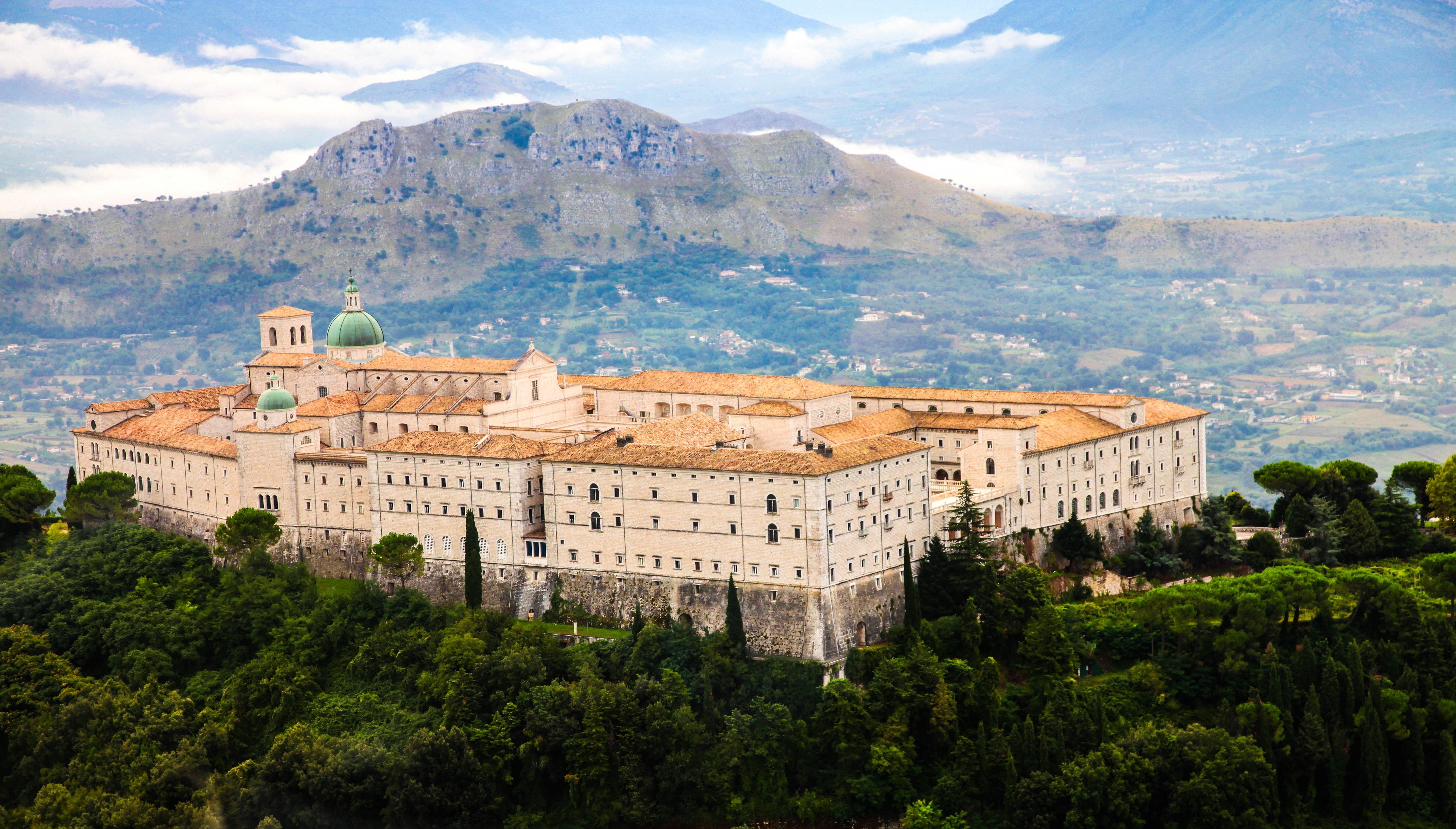
At Monte Cassino, around 530 AD, a monk rises before the sun, makes his way to the oratory, and chants the night office with his brothers. The ancient psalms move through the darkness in the Gregorian tones that Benedict organized for this purpose. When the chanting concludes, he returns to his cell for lectio divina, the traditional practice of sacred reading in which a short passage of Scripture is read slowly, repeatedly, and with attentive receptivity. After Lauds, the liturgy, and a common meal taken in silence while Scripture is read aloud, he goes to his work—whether in the scriptorium, the garden, or the kitchen, wherever the needs of the monastery direct him. As he works, his lips continue to move, for he remains in prayer.
On Mount Athos, in 1991, because this morning has not changed materially since the tenth century, monks rise at three to the sound of church bells and the talanton, the wooden board beaten to mark the Byzantine hours, just before chanting the Hours and celebrating the Divine Liturgy for the next five hours. A fifteen-minute meal follows, with spiritual texts read aloud throughout. Then the monk goes to his work: farming, gardening, cooking, maintaining the buildings, or the skilled crafts of iconography, carpentry, and bookbinding for which Athos is famous. And as he works, his lips move. He is praying.
The two mornings are separated by fifteen centuries and by the full theological distance between Western Latin monasticism and Eastern Orthodox hesychasm. Yet, in essence, they are the same morning.
Ora et labora, pray and work, is a metaphysical claim about the nature of reality and the nature of the human person, encoded in two distinct but deeply related traditions into a way of life so comprehensive that it takes years to inhabit and a lifetime to partially understand. It is a claim our civilization has not so much rejected as forgotten — forgotten so thoroughly that most people cannot imagine what it would mean for it to be true.
